



Virtual past
We can read books about it, we can marvel at paintings from that era, but what if we could experience seventeenth-century Amsterdam for ourselves? That is the premise behind the newly opened virtual museum, ENTR.
The capital has gained another special attraction. ENTR opened at the end of May on the Oosterdok, between Amsterdam Central Station and the public library; it describes itself as the Netherlands’ first cultural virtual reality (VR) museum.
Visitors are transported back to Amsterdam in 1652, the year in which a major fire completely reduced the old Town Hall on the Dam to ashes. In just over half an hour, visitors wearing a VR headset are guided past a number of locations in the old city, from the harbour to an inn and from a printing works to a bridge. The focus is on the lives of ordinary Amsterdammers, with visitors able to influence the storyline as they experience it by choosing a specific perspective.
Interactions
The experience also offers numerous opportunities for visitors to interact with elements of their exceptionally detailed virtual environment: from stroking a dog or cat to filleting herring, and from helping with letterpress printing to raising a glass of beer. ‘Interactions like these are crucial,’ says Vincent Slangen, founder and CEO of ENTR. ‘That way, you become part of the story, rather than just watching it.’
Visitors actually walk around within the experience, with glowing virtual footprints marking the route. There’s a reason for this. ‘If you move around in a VR world without actually moving in real life, you very quickly feel sick,’ says Slangen. Another condition the creators had set beforehand was that visitors must also be able to see one another in the VR world. ‘That’s what makes it a truly shared experience.’
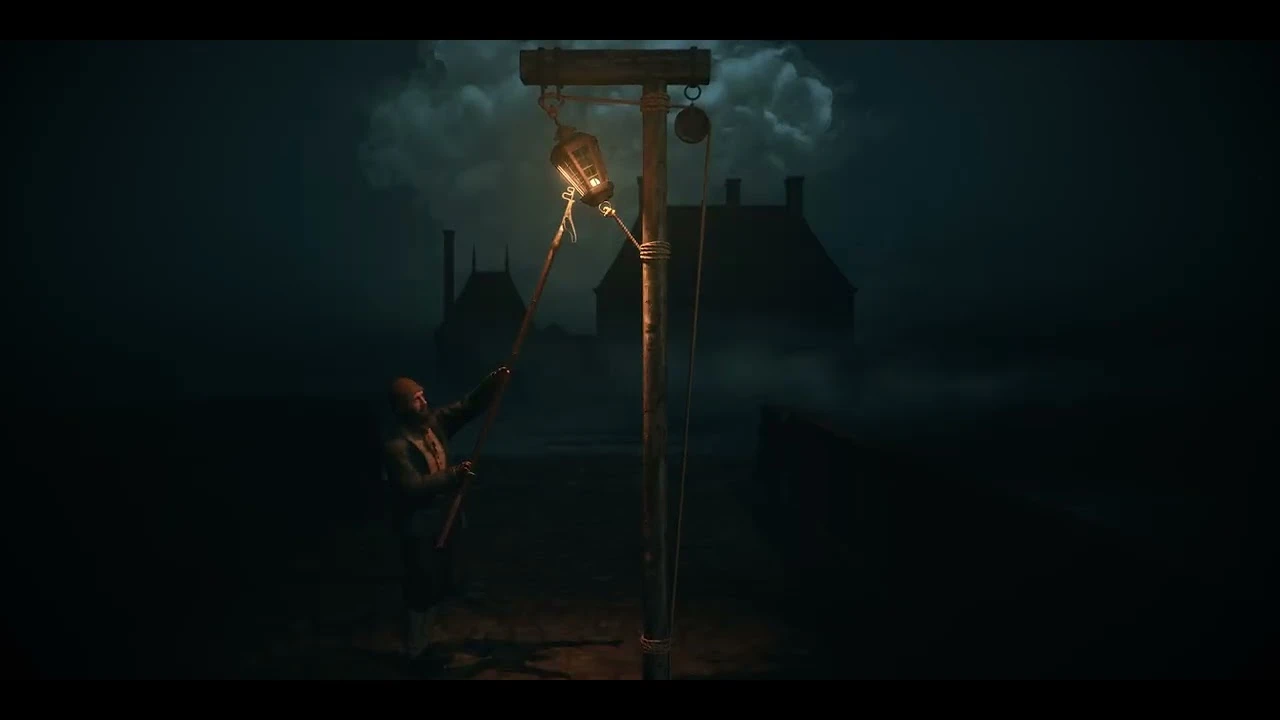
Time travel
Along a long corridor on the first floor of the museum are seven small rooms where the VR experience takes place. Anyone who has just returned from the seventeenth century, taken off their headset and is looking around for a moment, can hardly imagine that the entire journey through time took place in one of these rather small rooms. Within these four walls, dotted here and there with QR codes to reset the headset if necessary, the past came to life through technology of the future.
Slangen talks about the 2.5 years of blood, sweat and tears that preceded the opening. Most of the work wasn’t in the historical research. The biggest challenge was finding the right technology. Slangen travelled all over the world, visiting every VR experience he could find. ‘You have the best experience when, as you go along, you completely forget that any technology is involved at all,’ says the former banker. ‘But it’s extremely difficult to achieve that.’
Central processing unit
VR experiences are mainly found in arcades, where nine times out of ten they involve shooting zombies in a dystopian urban landscape. Cultural VR experiences rarely go beyond sitting in a corner of a museum, with a headset attached by a cable, says Slangen.
‘You can transport visitors into the virtual world by displaying it on their headsets. But then you’re tied to a processor housed within the headset itself.’
Another option is to connect each headset to a central processor, which streams the images to the headsets. In that case, the connection must be flawless, as any delays or glitches would be disastrous. Slangen, together with partners from Belgium and France, managed to find a solution to this. So now, each headset no longer needs to be connected to its own PC; instead, 140 headsets can stream an experience simultaneously from the cloud.

Strategically positioned trolleys
As well as the virtual experience itself, ENTR’s logistics are ingenious. Visitors enter in groups of up to four people. The technology is set up in such a way that one group does not disturb the other, that there are no collisions, and that the sound does not cause any disturbance either. ‘It works perfectly,’ says one of the staff members, ‘until recently, when a visitor in an electric wheelchair drove straight through everything.’
Although visitors feel they can move about freely, the opposite is true. If, for example, they are standing on Dam Square, virtual characters and strategically placed carts block their path. If, as a visitor, you try to step over one of these carts, you immediately lose the image on the glasses. ‘You’re stepping out of the experience,’ appears before your eyes.
Just a quick wave
There are no cameras, but staff do walk through the corridor lined with the seven VR rooms to keep an eye on things. The introductory video explains that visitors who get a bit lost and need help can raise a hand to wave briefly. AI systems are supposed to detect this and alert a member of staff, but that system wasn’t working yet when De Ingenieur paid a visit.
The opening of ENTR was preceded by a pilot project a short distance away in De Nieuwe Kerk. Thanks to that shorter experience, which took visitors to the historic Botermarkt (now Rembrandtplein), the creators were able to iron out a lot of the teething problems. The possibilities are now virtually limitless. Why not take a virtual trip to the Battle of Waterloo? Or to the moon? The idea is to add one new experience to the programme each year. But other organisations can also use our technology, says Slangen. ‘Does the police or a company want to give a presentation? We also provide the space and technology for that.’
Image: ENTR


Comments