

Beloved Netherlands
Where is our shared vision for the future?
As Dutch people, we designed our own country. It is high time we did so again, writes Dina El Filali, engineer, entrepreneur, lecturer and spoken wordartist.
TEXT: DINA EL FILALI
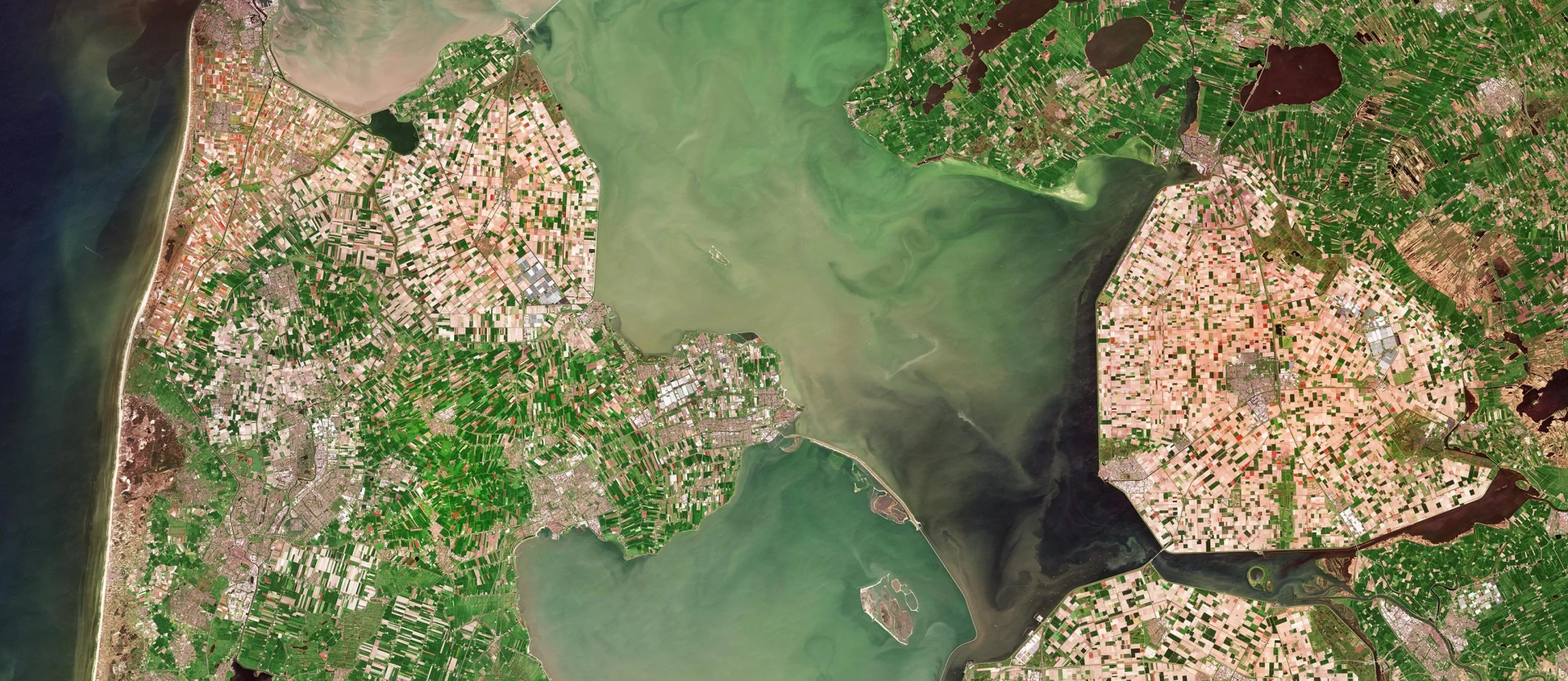
God created the earth, but the Dutch created their own country. After the 1953 North Sea flood, we were faced with a choice. How do we protect ourselves from the sea, and at the same time: what sort of country do we want to be? We decided then to look beyond our own generation and found a sense of unity in a shared challenge. The world still looks on with admiration at the result of this – from the Delta Works and the Afsluitdijk to an entirely new province reclaimed from the water.
I am therefore proud to call myself a Dutch engineer. Proud of what we have built, and even more so of the mindset behind it. The ability to face major challenges head-on, to take responsibility for a future that extends beyond our own lifetimes.
Water as a life lesson
I grew up in multicultural Amsterdam, where my Moroccan roots and my Dutch identity went hand in hand. Perhaps that is why I have come to view systems differently. I grew up between herring snacks and Turkish pizzas, with ‘Aicha’ by Khaled and Outlandish as the soundtrack. It is this very diversity that makes nature – as well as teams and organisations – resilient. Different perspectives, varied experiences, new ways of looking at the same reality. Diversity is therefore one of the greatest sources of resilience that the Netherlands possesses. A source which, from my perspective as a systems engineer, we still make far too little use of.
But there was something else too. My fascination with systems and technology brought me to Wageningen. There, I got to know a different side of the Netherlands: the Netherlands of the river delta, of farmers and landscapes. The Netherlands of engineers – people who understand that living within a complex system requires giving space, adapting and providing direction. It was there that I learnt perhaps the most important lesson of all. Water safety isn’t just about standing firm, building higher dykes and exercising control. Sometimes a system actually calls for something different. Sometimes it calls for ‘giving the river space’.
Open to change
The funny thing is that my Moroccan grandmother had actually taught me this lesson long ago. She always put an extra tea glass on the table. No, we weren’t necessarily expecting anyone, but someone might turn up out of the blue, mightn’t they? It was only later that I understood the reasoning behind it. You create resilience by leaving room for the unexpected: a guest, a change, an uncertain future.
Does that also apply to a society? In recent years, I’ve seen a different threat emerging. One of the qualities that made the Netherlands so strong is slowly disappearing. I’m referring to the willingness to change, to work together and to look beyond the next general election. The Netherlands did not become great through fear of the unfamiliar, but by being open to new ideas, trade and innovation. Certainly, our history is not without its dark sides. But it is precisely the ability to reflect on this, to recognise that systems often work primarily for those who benefit most from them, and to learn from this, that makes a society resilient.
Symptoms of the same problem
That is why it pains me to see how we are increasingly pitted against one another. City versus countryside. Newcomer versus long-established Dutch citizen. Farmer versus nature. Citizen versus government. As if the problem always lies with the other side. Whilst, ultimately, we are all dependent on the same system.
I see it in the way we treat nature, in the grid congestion that we’ve known was coming for decades, the nitrogen crisis and (perhaps most painfully) the declining trust in our democratic constitutional state.
More and more often, we act as if these are all separate problems that have nothing to do with one another – and that someone else should sort out. When do we ask ourselves: what sort of future do we actually want to build, and what role do I want to play in it? What does that require of me? Of the choices I make? Of my ego, my assumptions, my thoughts and prejudices about others, about the system of which I am a part?
The lack of a shared vision
And I also understand why that is so difficult. We built dykes because we saw the water coming. We knew what was at stake. We protect what is visible, but forget that it is precisely the invisible that underpins our society. The democratic rule of law, the international law that enables cooperation and trade, the freedoms that stem from them. The trust that, despite our differences, we can build a society together. Meanwhile, our comfortable lives in the West rest, to a large extent, on precisely that fragile, invisible infrastructure.
For above all the major societal challenges of the moment looms another question: how do we give new direction to the narrative that unites us? Such a long-term narrative, extending beyond the next elections, is lacking. Yet the challenges of our time call for leadership that shows courage and responsibility – a narrative with which we can all identify.
An undercurrent of hope
Despite everything, I see signs of that bright future. In neighbourhoods where community leaders stand up for young people. In energy co-operatives that I have had the pleasure of supporting. In people and organisations that take action when they see that something is no longer working as intended. People who take responsibility and forge connections, even when no one asks them to, and who sometimes remind the government of the laws and values upon which our society is built.
There I see the same spirit that once tamed a delta, born of a shared belief that the future is something we build together. Because in that respect, we still have a lot to learn. A society is not so much created by policy, but because people participate, realising that they themselves are part of the system they wish to change. Change begins with ourselves: by building something new, by consciously creating space, or by helping the existing order to remember what it was originally designed for.
Dear Netherlands, today we once again face major challenges. It is time for us to relearn how to shape our country, and with it our society. A country that has designed itself once before can certainly do so again.


Comments