



Orange leather
A startup in Sicily processes orange peels into a new type of leather that is more durable than synthetic or real leather. Suitable for products from belts and bags to car interiors.
Eureka is the rubric for ‘product designs for tomorrow’ in De Ingenieur.
Sicily is known, among other things, for its delicious oranges. But the annual harvest does produce about 1.3 million tonnes of waste in the form of peels. Most of it is burnt or thrown away. Ohoskin, founded by an engineer, a textile designer and a chemist, came up with an application for the peels. The Sicilian startup turns them into a sustainable alternative to (synthetic) leather.
Ground husks
This follows a process that in itself is simple. The peels are first dried, then ground to a fine powder and mixed with a biodegradable resin based on recycled phthalate-free PVC. This creates a bio-based alternative to leather that looks and feels like real leather, but without the use of animals and with a low environmental impact: theCO2 reduction is 90 per cent, according to Ohoskin. The entire process, from start to finish, takes place in Italy.
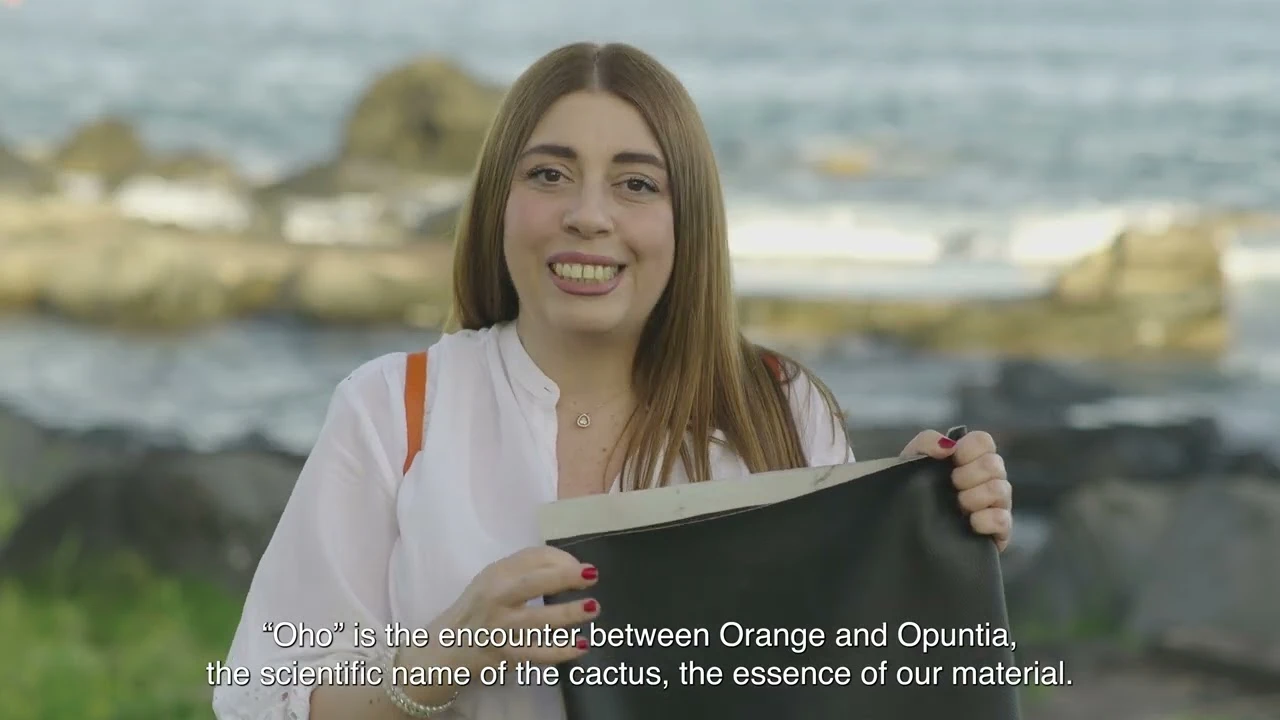
The material, which has the same name as the company, is waterproof and easy to clean. It has been extensively tested for strength and durability. The leather can be worked well into all kinds of products, from interior design to fashion accessories. Designers can print, embroider, emboss and choose from different textures and colours based on natural dyes on it. Ohoskin used it to cover the interior of an orange Microlino car. For an average car, this would otherwise require three cow hides just for the seats, which are sprayed with a plastic layer for this purpose.

Apples of orange
A Dutch startup Peelpioneers had a similar idea, they wanted to use orange peels for fragrance and flavourings for food and cosmetics, and later went on to extract fibre from the peels. Late last year, they went bankrupt because they could not raise enough money to scale up production. Early this year, however, there was good news: they will get a restart after all. The two operations will be separated, though. The production of ingredients for the food industry will remain in the Netherlands. The fibre production and biochemistry branch will move to Spain, region of Murcia, known for its citrus production.
Per linear metre, Ohoskin costs more than 50 euros, according to the website. Some brands already use the material in their products, such as MoEa in trainers, Miomojo | Certified B Corp in bags and so does the manufacturer of the electric midget car Microlino.
Photo: Ohoskin




Comments