

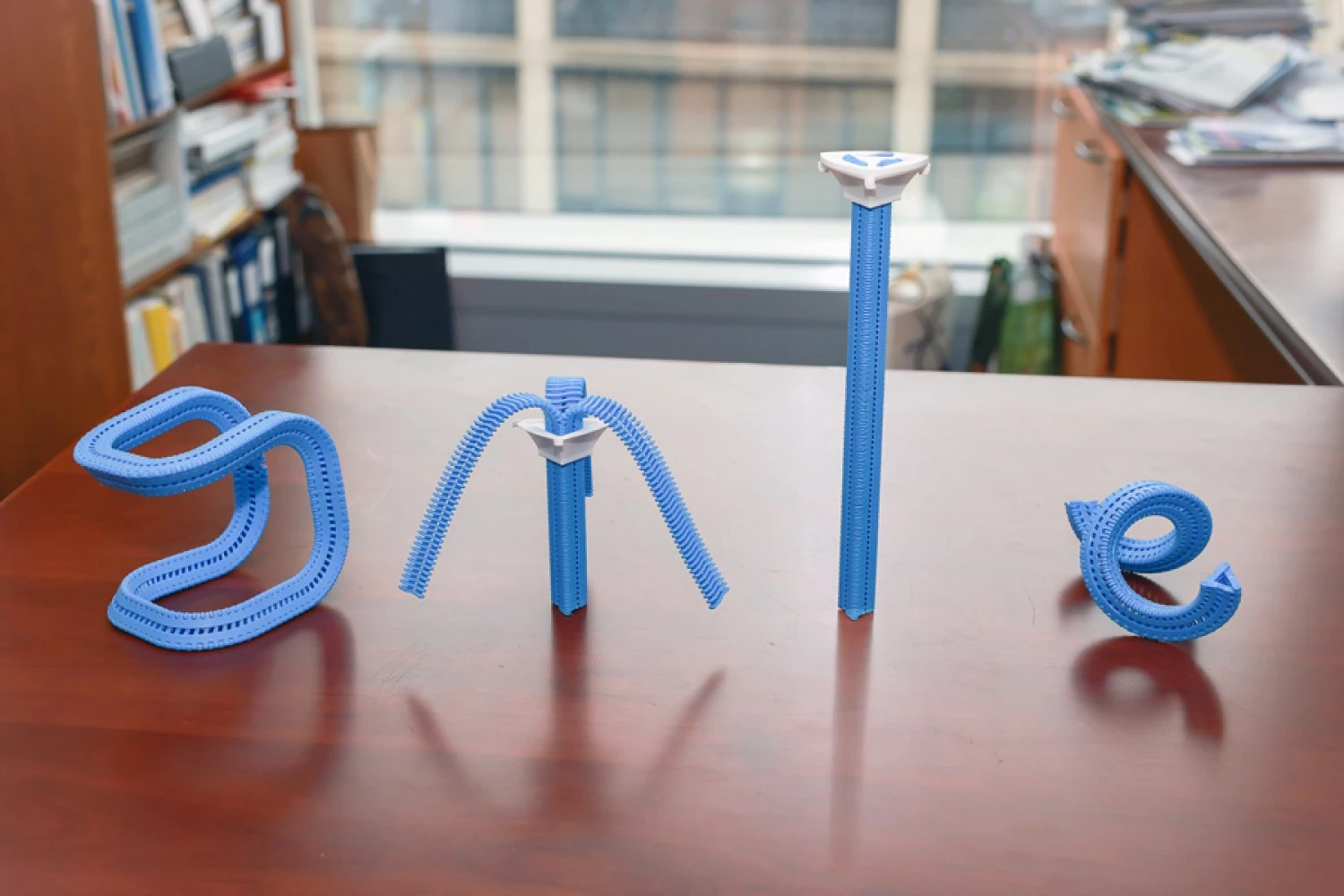

Three-way zipper
The three-sided zipper gives objects varying degrees of rigidity, from flexible to rigid.
Eureka is the section on ‘product designs for tomorrow’ in De Ingenieur.
Sometimes it is useful for objects to be flexible at one moment and rigid the next. Think of robotic arms, tents or installations that are frequently dismantled and reassembled elsewhere. Researchers at the American technology institute MIT have revived an old idea to create this sort of object: the Y-zipper or three-sided zip.
The concept was devised forty years ago by MIT professor William Freeman, then an electrical engineer at Polaroid, as an entry for an innovation competition. It resembled a standard zip, but was triangular in shape. The invention was intended to enable chairs, tents and bags to switch seamlessly between a soft and a rigid state, making them easy to pack away and set up. The idea was rejected, but Freeman did apply for a patent for it.
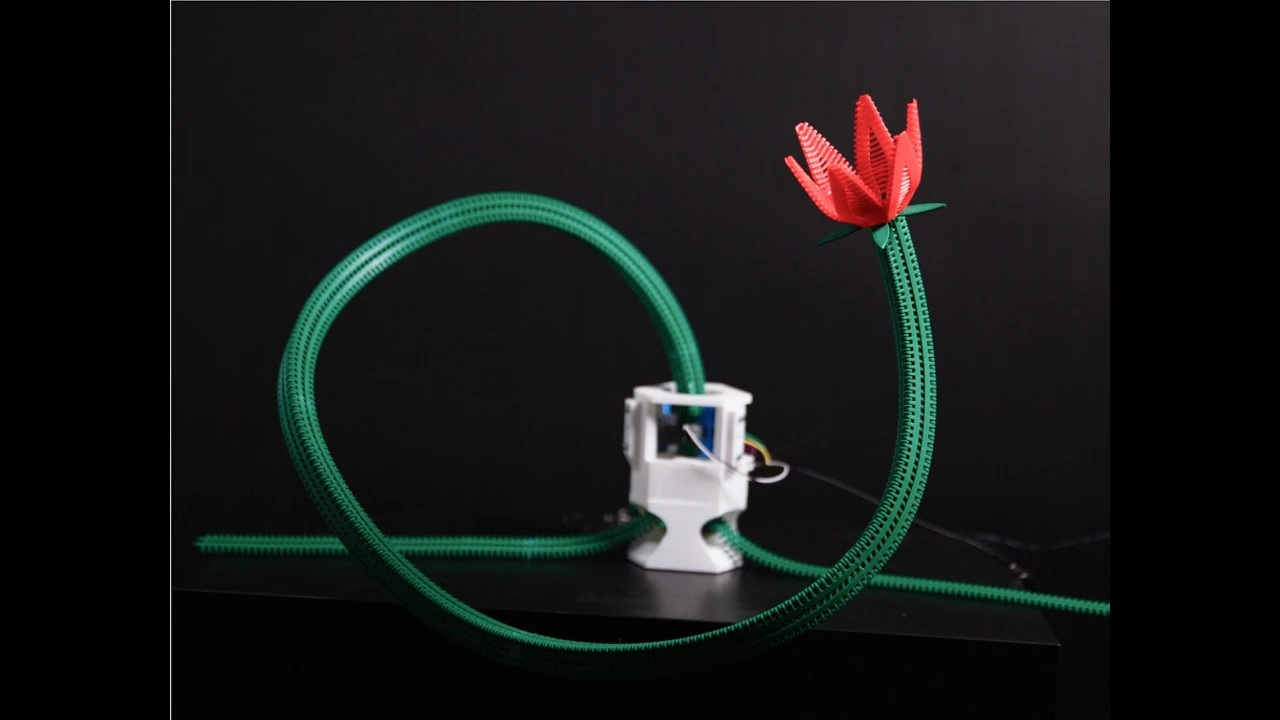
It’s finally been put to use: MIT’s Computer Science and Artificial Intelligence Laboratory has developed software that helps users design various types of ‘three-sided zips’, which are then automatically produced by a 3D printer. The plastic Y-zips can then be integrated into the desired objects.
Users of the software can determine the length of the zip and its zipped-up shape: straight, curved, coiled like a spring or twisted like a screw, each time with an angle and direction of rotation of their choice. One application the team developed themselves was a Y-zipper to fit around a plaster-cast wrist. This allowed the plaster cast to be adjusted to be looser or tighter as required.
The first prototypes have been tested and proved capable of withstanding 18,000 opening and closing cycles. In the future, the researchers hope to create larger Y-zips and metal versions as well.
Photo: Tim Malieckal / MIT CSAIL





Comments