



Sleeping bag for freezing temperatures
No animal is as resilient to extreme weather conditions as the tardigrade. The designers of a sleeping bag thought we could learn a lot from it.
Eureka is the section on ‘product designs for tomorrow’ in De Ingenieur.
Tardigrades, also known as water bears, are minuscule organisms considered to be the most resilient animals on Earth. Extreme heat, cold or high-energy radiation cannot harm them. Conditions that most people spending a night in a sleeping bag will be spared. Nevertheless, the designers at Hong Kong-based Graphene-X decided to name their new sleeping bag after this creature.
Their Tardigrade sleeping system consists of two sleeping bags and a separate insulating layer that can be combined as required. This creates a modular system which, according to the makers, can be used from summer nights right down to temperatures of around -30 degrees Celsius.
The innovation lies primarily in the materials used. The insulating layer combines graphene – an extremely thin and strong carbon material with high thermal conductivity – with aerogel, an ultra-light material consisting of more than 90 per cent air. Aerogel was originally developed for space applications, where every gram counts and temperature differences are extreme.
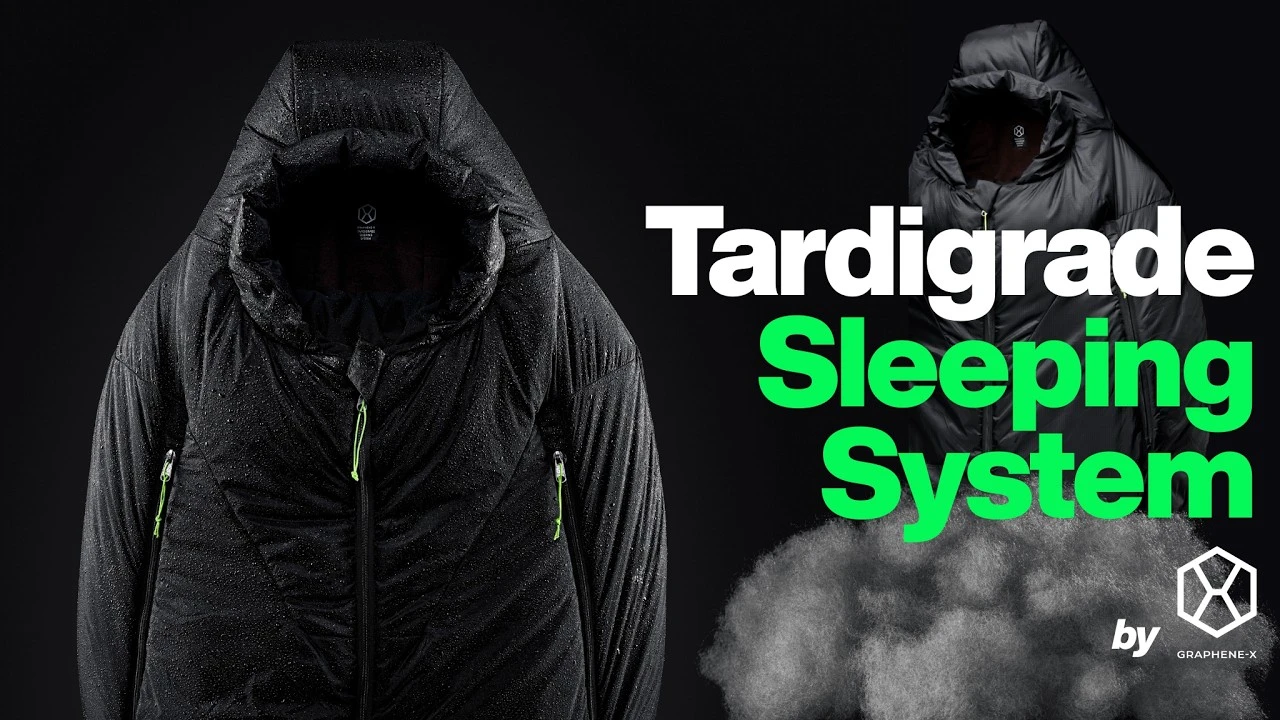
In addition, the sleeping bag is fitted with an insulation system that adapts to weather conditions: the ‘weather adaptive insulation’
system. This involves aerogel particles incorporated into flexible tubes which expand or contract depending on the ambient temperature. According to the developers, this naturally creates more or less stagnant air, which is the secret to effective thermal insulation.
Separate arm openings are designed to enhance comfort without causing heat loss. An extra layer of graphene has been added at the foot end to prevent cold feet. A complete set, comprising a thinner insert, a thicker insert and the cover, costs around 540 euros on the Kickstarter crowdfunding platform. Graphene-X promises to start deliveries this coming autumn.
Photo: Graphene-X





Comments