

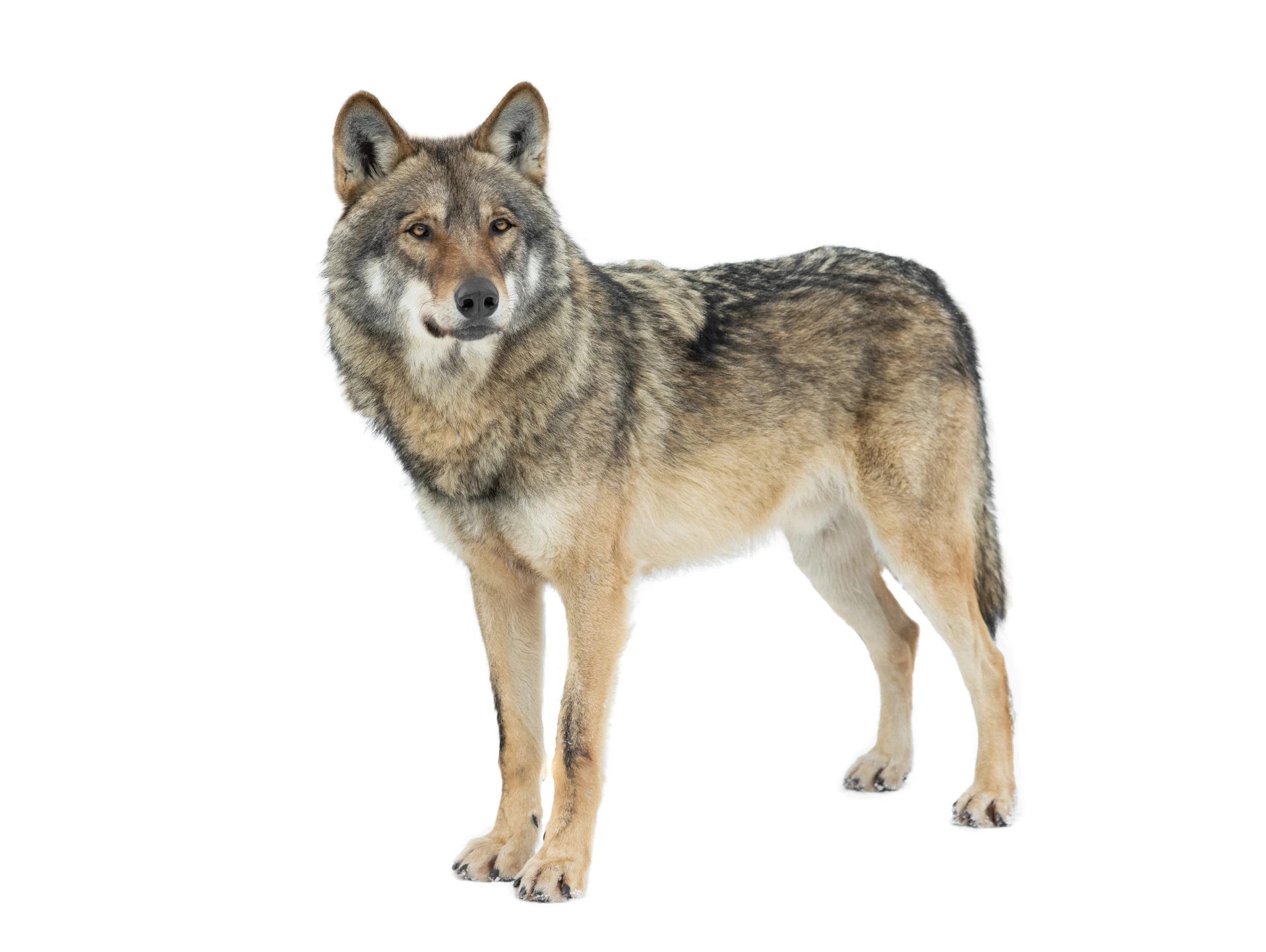

Wolf fence with a Pavlovian response
To protect his sheep from wolf attacks, a Frisian farmer designed a fence that acts as a permanent deterrent.
Opinions vary widely on whether the presence of wolves in the Netherlands is desirable. But now that they are here, sheep farmers find themselves forced to protect their flocks from attacks by this predator. Wolf fences work, but not 100 per cent of the time. Wolves often return to see if there is still a way to reach the sheep. Sometimes they jump over a fence or crawl underneath it.
A sheep farmer from Friesland, Henry Hoiting, devised a solution to this problem. He developed a ‘conditioning’ fence, which delivers stronger electric shocks and to which tufts of wool with the scent of sheep have been attached every fifty metres. The clicking sound of the electric fence is clearly audible with this type of fence. The scent and the clicking attract curious wolves, which then thoroughly investigate the fence. As soon as a wolf touches the live wire, it receives a massive shock. After that, it will have no desire to try again. This triggers a Pavlovian response: the ticking sound and the scent are enough to keep the wolf at bay.
The new fence has been tested at various locations in Drenthe and Friesland by Hoiting and PhD student Matthieu Castel from the University of Antwerp and the Flemish Institute for Nature and Forest Research (INBO). Among the flocks surrounded by a conditioning fence, no sheep were attacked during the one-and-a-half-year trial period, whereas this had previously been the case. The project, which began with fixed fences, has since been expanded to include adapted nets that can be deployed flexibly. This means that even flocks which move around frequently can be protected.




Comments